Use case · Form 01
Dining tables
A dining top sized to the room, not the other way around. Ten species, face, edge, or end grain, any dimension to the sixteenth — priced live as you set it.
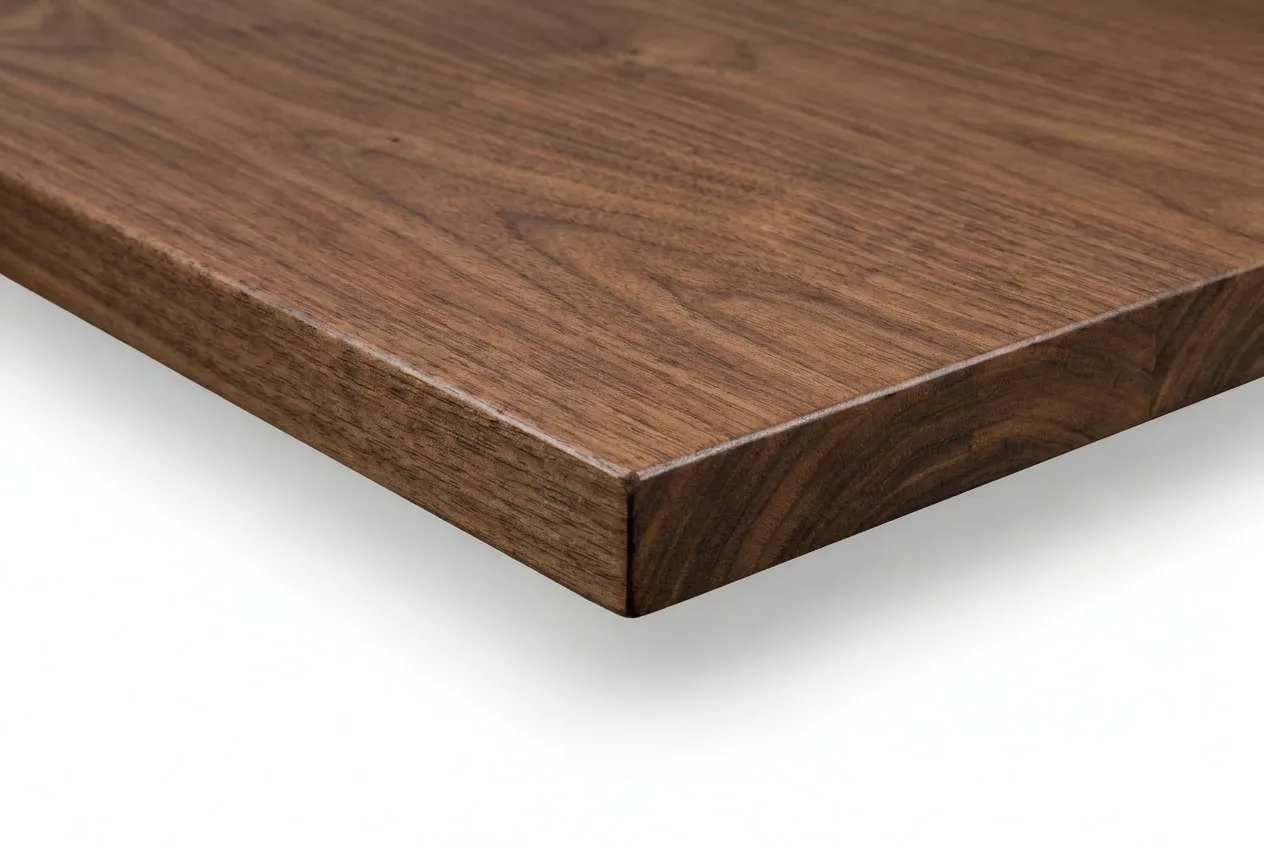 WALNUT · ALTERNATE VIEW
UNDECIDED? — HELP ME CHOOSE A SPECIES →
02Size
FACE · EDGE · END, COMPARED — THE THREE BUILDS →
THE PROFILES, DRAWN → · OUR HAND-CARVED LIVE EDGE →
UV-CURED · ZERO-VOC · REPAIRABLE IN PLACE — ABOUT THE COATING →
CUSTOM SHAPES — BY QUOTE · MATERIAL IN HAND — GET SAMPLE
Sizing a dining top
Allow roughly 24 inches of table edge per seat and 36 to 42 inches of width for place settings to face each other across shared dishes. A 96 × 40 top seats eight comfortably; a 72 × 36 seats six. Set your exact numbers on the sliders — the price follows the board footage, nothing else.
Construction and species
Face grain wide board shows the most figure and is the classic dining choice. Walnut and White Oak are the most-specced dining species; the whole spectrum is open, pale Hard Maple to striped Macassar Ebony.
The base
Tops are built to fit the base you have or the one your designer specifies — thickness and overhang set in the configurator. Need the base built too? That runs through the custom path.
Questions
- What thickness for a dining table?
- 1 3/4 in is the standard and suits most bases and rooms. Anything from 1 to 2 3/4 in configures directly; end grain runs thicker.
- How many does a 96 × 40 top seat?
- Eight, comfortably — three per side and one per end. Move to 108 in or longer for ten.
The full form: TABLETOPS → · Other uses: Round tables · Desks · Bar tops · Restaurant tables · Wood countertops